I'm going to be published!


8-18-06

Knopf (Random House) has just picked up not just my first but also my second book, in a very nice two-book deal!  My agent ROCKS!

No, the books have nothing to do with dogs!  (Isn't that amazing?)  They're going to be brought out as Young Adult fantasies.  They are not part of a series -- each stands alone, although they are similar in length, style, and theme.

Knopf is betting that YOU will like my books -- it's easy to tell the publisher's optimistic because they're paying me a lot more than the median advance for a first novel.  So I'm optimistic, too!

I'll post a link to Amazon as soon as my first book comes out (should be in 2008).  In the meantime --

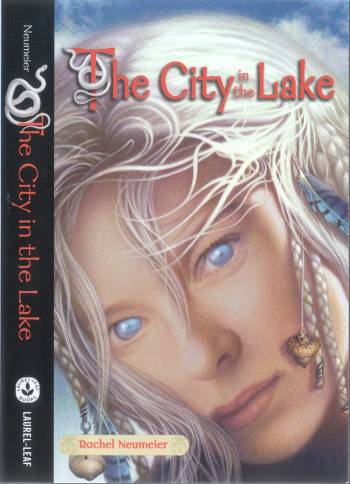
The first book is tentatively titled The City in the Lake. 

    In a land where enchantment falls through the air as naturally as light, it is perhaps not astonishing that young Prince Cassiel should vanish.  Perhaps he simply dipped a mouthful of water from the wrong pool and turned into a shower of light, or a singing sword, or a snow-white bird with a cry that could pierce your heart like a golden arrow.  Such things occasionally happen, and they are rarely permanent.

    But in fact the truth is nothing so simple, and terrible peril awaits those who find the lost prince . . .


The second book is called Griffin Summer.

    The griffins come to Feierabiand with the early summer warmth, riding the wind out of the heights down to the green pastures of the foothills.  The wind they bring with them is a hard hot wind, with nothing of the gentle Feierabiand summer about it.  It tastes of red dust and hot brass, and the desert that follows the wind engulfs and destroys all living creatures that cannot flee past its borders.  But with them the griffins bring more than fire and the desert:  they are only the harbingers of a danger far more deadly than blowing sand or red stone.


There.  I hope those sound interesting and fun.  Try them yourself!  Give them to your kids for Christmas or birthdays!  Or other people's kids -- no need to be picky.

Seriously, if you like Patricia McKillip, try The City in the Lake.  Not that I claim to write that well.  Maybe someday . . .

My agent says my books remind her of Robin McKinley, so if you loved The Blue Sword (and honestly, who doesn't?  Wait, you haven't read The Blue Sword?  Well, rush right out  -- seriously) then you might like City. 


FAQs:

1)  How long did it take you to write your first book?

City isn't my first book -- it's just the first one I made a serious effort to get published.  It took about two months to write, counting revisions, but during one of those months I worked on it full-time.


2)  How long have you been writing, then?

I've been writing seriously for about eight years, but not continually.  I frequently took months off for one reason or another.  I don't think I ever took a whole year off, but I might have.  City was the fifth book I completed during those eight years, Griffin Summer the sixth.  The first ones taught me a lot but probably aren't publishable.


3)  So you don't write every day?

Nope.  I realize that's heretical.  I will probably take less time off now that I'm in position to seriously try to build a real career out of writing, but I do a TON of garden work in the spring and a TON of work with the dogs all the time -- if you're pouring hours into researching stud dogs or building up your pedigree database, then that time has to come from somewhere.  I usually switch from one activity to the next, working at each in turn in a fairly obsessive fashion, rather than doing each one every day.

When I am writing, I spend a LOT of time at it per day and don't take breaks.  If I take even a day or two off at those times, I risk losing momentum.  For me, it's normal, during the last half or third of a book, to write eight or twelve hours a day (I make sure that this part falls during Christmas break or during the summer, when I take a lot of time off work).


4)  What made City seem to you like the one to really try for?

I was confident it was good, and it was short, and it stands alone rather than requiring a sequel.  Everything I had read about publishing at that time suggested to me that shorter books are much more marketable for a first-time author, though apparently there's more leeway for fantasy than other genres.


5)  How long did it take to find an agent?  Do you think it was necessary to have an agent?

It took months of careful research to learn a little about publishing, decide that an agent would be a huge huge huge asset, build a list of reputable agents who handle fantasy and were seeking new clients, research each one so I could find out exactly what kind of query each prefers and which authors they already represented, and write the queries.  I queried 12 agents as a first round and had 12 more as a back up list, I think.  It took months to get responses back from most of the agents -- some never did respond.  Only one of the first group requested the full manuscript, and I bet she's happy now!  Extraordinarily useful links for information on writing, publishing, finding agents, etc, are below.  Dedicate some time to following lots of the links and reading lots of the articles.  I suggest you wait to query agents until you've checked them through Preditors and Editors.  There's a link from the sfwa site.

http://www.agentquery.com/default.aspx

http://www.sfwa.org/beware/agents.html

http://misssnark.blogspot.com/

http://www.hollylisle.com/fm/


6)  What do you think the odds really are of first-time author getting published?

Well, it worked out for me.  I didn't have any publishing credits at all before this.  Well, except for a couple of  articles in journals like The American Journal of Botany, and that is NOT what agents or editors want to hear about, since extremely dry writing in the passive voice does not exactly sell fiction.

I don't think there are odds as such.  Nobody is drawing numbers out of a hat, here; this isn't publication on the lottery system.  Everything I've read and heard indicates that 95% or more of all the queries that agents and publishers receive are either crap or clichéd (or both).  If your book stands out because it's a grammatically-correct page turner with any kind of unusual twist, then my guess is, it's not facing as much competition as you fear.

Or that's my take.